Every ceremony requires a container - a way of marking that what is happening here, in this time and this space, is different from ordinary life. The drum has served this purpose across cultures and throughout human history. Not because of tradition alone, but because of what the drum actually does.
Creating and Holding Sacred Space
A drum struck at the opening of a ceremony does something immediate and unmistakable. It marks a threshold. The sound announces - clearly, physically, without ambiguity - that something is beginning. Attention gathers. The ordinary mind settles. People arrive in the room in a way they weren’t quite present before.
This is not a psychological trick. The drum’s sound and vibration act directly on the nervous system, shifting participants from the scattered, analytical state of everyday life toward the more receptive, present state that ceremony requires. The container is not created by intention alone - the drum actively builds it through sound.
And once established, the drum holds that container. The rhythm becomes the boundary of the ceremonial space - a living edge that contains what is happening within it and keeps the ordinary world at bay.
Synchronising a Group
Where multiple people gather for ceremony, the drum does something extraordinary - it synchronises them.
Entrainment is the tendency of rhythmic systems to lock into a shared pulse when exposed to a common rhythm. Heartbeats, breath, brainwave activity - all begin to align with a steady external beat over time. In a ceremonial context this means that a group of people, each arriving with their own internal rhythms and preoccupations, gradually become one shared body moving together.
This dissolving of individual isolation into collective experience is one of the most profound effects of ceremonial drumming. The sense of separation - of being a self apart from others - loosens. Something larger becomes available.
Vehicle for Spiritual Transportation
In traditions of shamanic and ceremonial practice around the world, the drum is understood as the vehicle that carries the practitioner or participants between states of consciousness - from ordinary awareness into the deeper, more expanded states where ceremony does its deepest work.
The steady rhythm at specific tempos induces theta brainwave states - the same states associated with vivid dreaming, deep meditation and expanded perception. This is not metaphor. The drum literally changes the state of consciousness of those who listen to and play it.
And when the ceremony is complete, the drum calls everyone home. A change in rhythm, a slowing of the beat, a final strike - and the threshold is crossed back. Ordinary awareness returns. The ceremonial space closes. The drum is both departure and return.
Grounding and Directing Energy
Within ceremony, the drum is also a tool of precise energetic direction. The practitioner can use tempo, volume and rhythm to alter the intensity of what is happening - building energy toward a peak, holding it steady, releasing it, bringing the group to stillness.
A slow, deep heartbeat rhythm grounds and settles. A faster, more insistent beat activates and builds. Silence after sustained rhythm creates a particular kind of space that nothing else can produce. The drum is not simply background - it is the instrument through which the ceremony breathes.
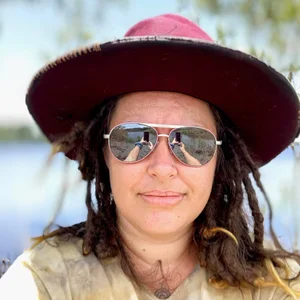
For those who work ceremonially - in healing, ritual, facilitation or spiritual practice - a drum that is truly your own is one of the most powerful tools you can have.
The frame drums I make are handcrafted in Coomba Park on the NSW Mid North Coast, using natural hides stretched over paulownia timber frames. If you feel drawn to explore one, you are welcome to browse what is currently available on this website.